WorkLocalHero
LocalHero
During the COVID-19 lockdown, local shops were among the hardest hit. For our master’s dissertation, five of us set out to design a collaborative, sustainable way to help them, mixing the best of local shopping with the convenience of online.
- 29Interviews with shoppers and shop owners
- 5Designers, fully remote
Context
In the middle of the COVID-19 crisis, there was real concern about what would happen to local businesses. Shops that weren’t digital had the hardest road back to normal, and promoting small shops was necessary to compete with superstores and big chains. The brief for our master’s dissertation was to find a collaborative, sustainable way to help, and it had to be an app.
Problem
Small businesses were closing because of the economic instability, their low level of digitisation (which made them less visible), and competition with large corporations. Customers, on the other hand, valued personal service, but got frustrated when a local shop couldn’t match the speed and price of online.
Role
My role was broad: from research to understand needs and opportunities, to competitive analysis, to designing the design system and the app itself, shared with four colleagues.
Process
We ran 29 interviews with shoppers and local business owners and found clear patterns. People shopped locally to take a walk around the neighbourhood, to socialise, to support nearby shops, or simply because they were close to home. And they loved being attended to in person, but waiting days for an order a shop didn’t have in stock, when it was cheaper and faster online, was a real frustration.
From there we built personas, journeys, an empathy map, wireframes and usability tests. Being so close to the product made it hard to see its architecture from the outside; only with feedback did we pivot and simplify the app’s structure.
Key decisions
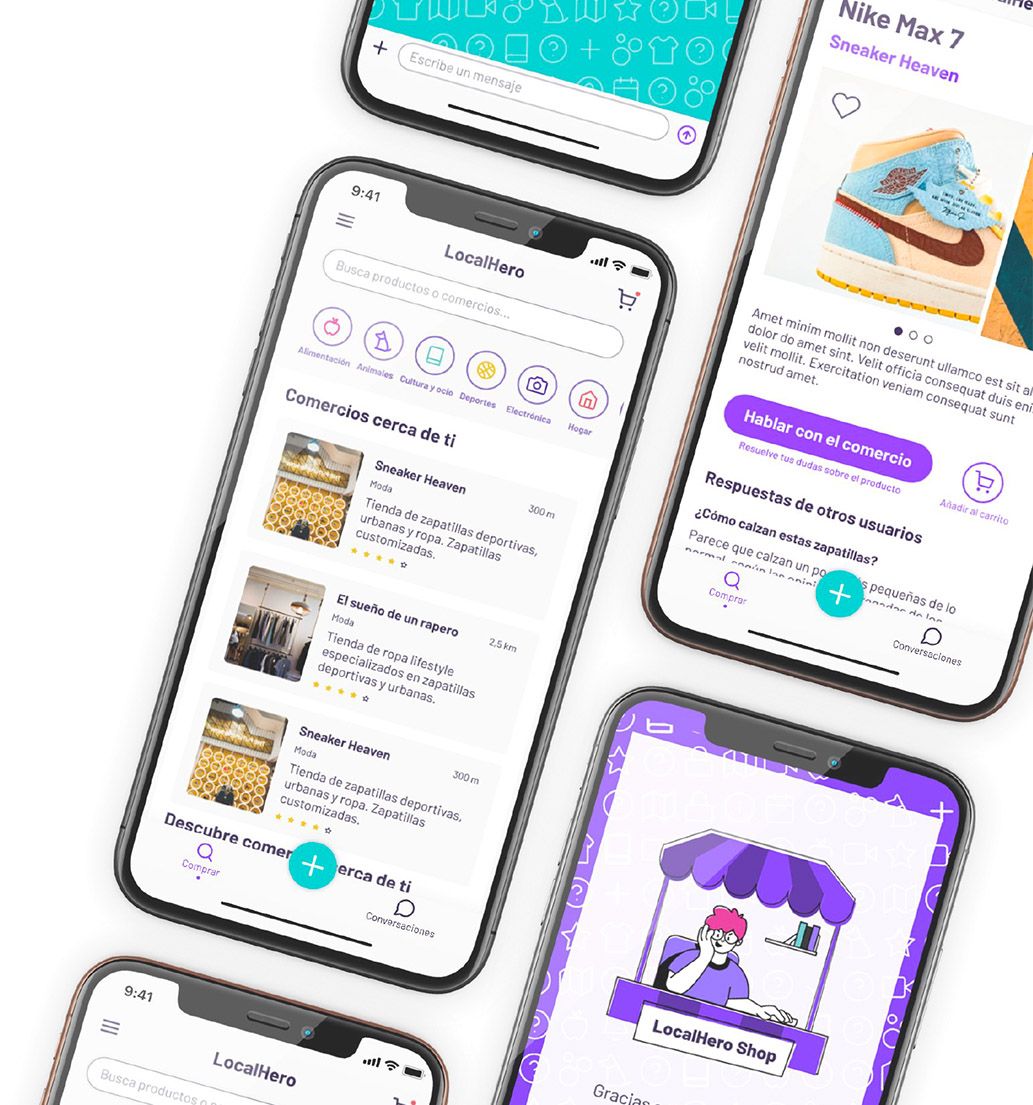
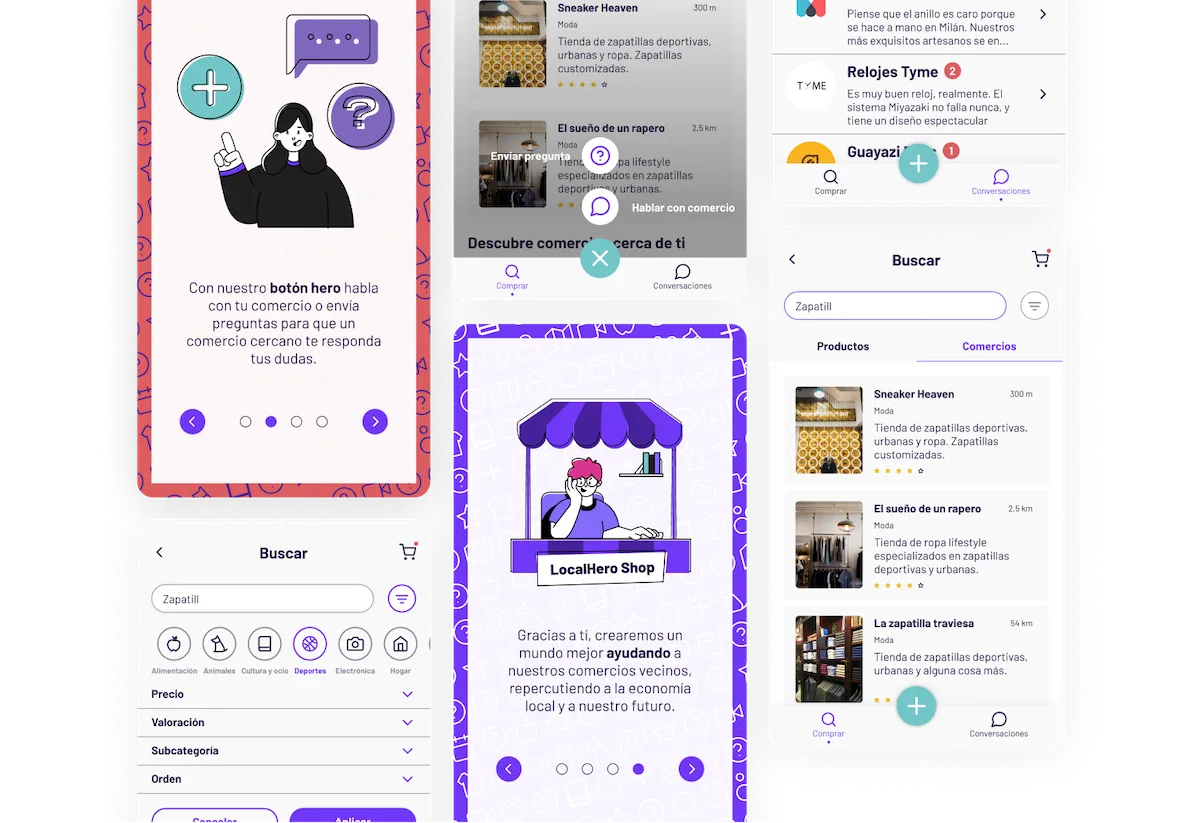
Local and online, mixed. See the shops near you, search and buy like in an online store, but with a more personal experience and a direct line to the shop.
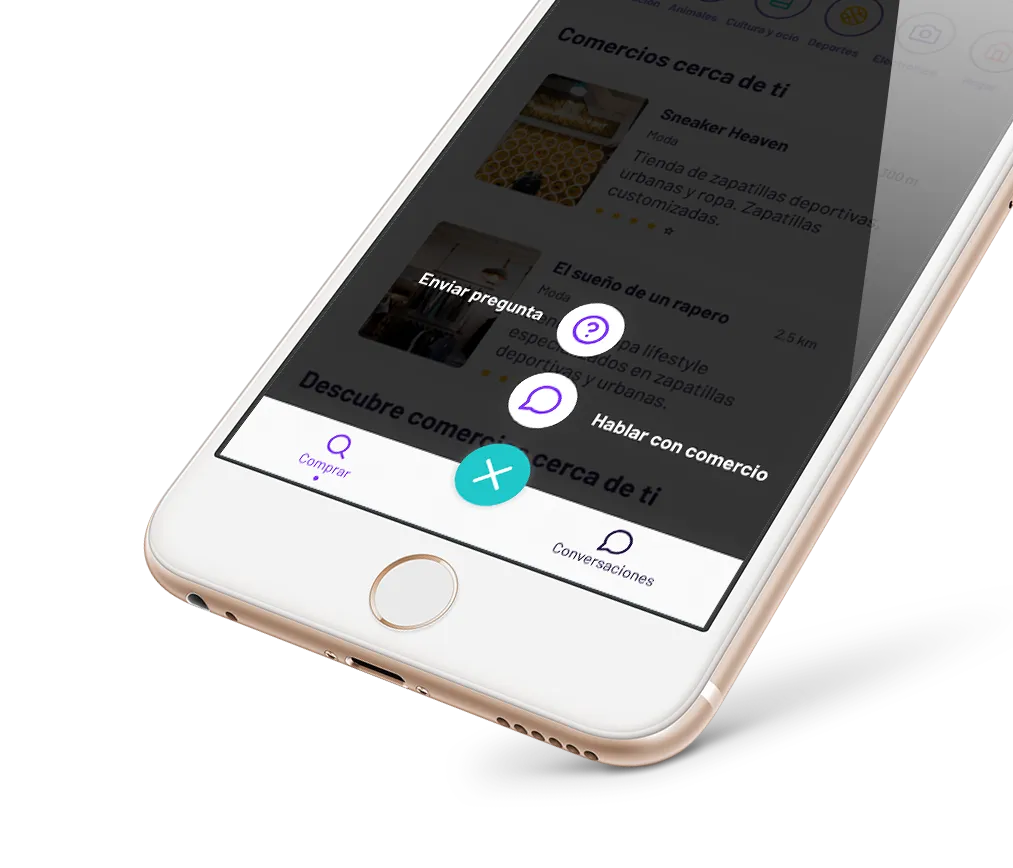
The Hero Button. The centre of the app: a shortcut to the most personal service, where you can talk to your local shop directly or send questions to shops and specialists.
HeroBot. An assistant to help you find answers and the right shop, even when you don’t know where to buy.
A small, real design system. Typography, colour and components defined as a system so five people could design one coherent app.
Outcome
We delivered an MVP with an interactive prototype and a documented design system, plus a roadmap for future iterations: badges for shops with environmental and ethical commitments, expert “hero” user profiles, collaborative neighbour-to-neighbour deliveries, a points programme, and a back office for shops to manage stock.
Learnings
The obvious isn’t so obvious. Usability tests opened our eyes. Finding the right people and asking the right questions matters more than any tool.
It was also my first time seeing the whole process of creating an app end to end with profiles who each brought a different point of view, working remotely in a way that was new to all of us.