Worke·voting
e·voting
In Spain, voting by mail has a bad reputation. Queues abroad, slow bureaucracy and no certainty your vote has counted push people to give up their right to vote. e·voting explores what it could feel like instead.
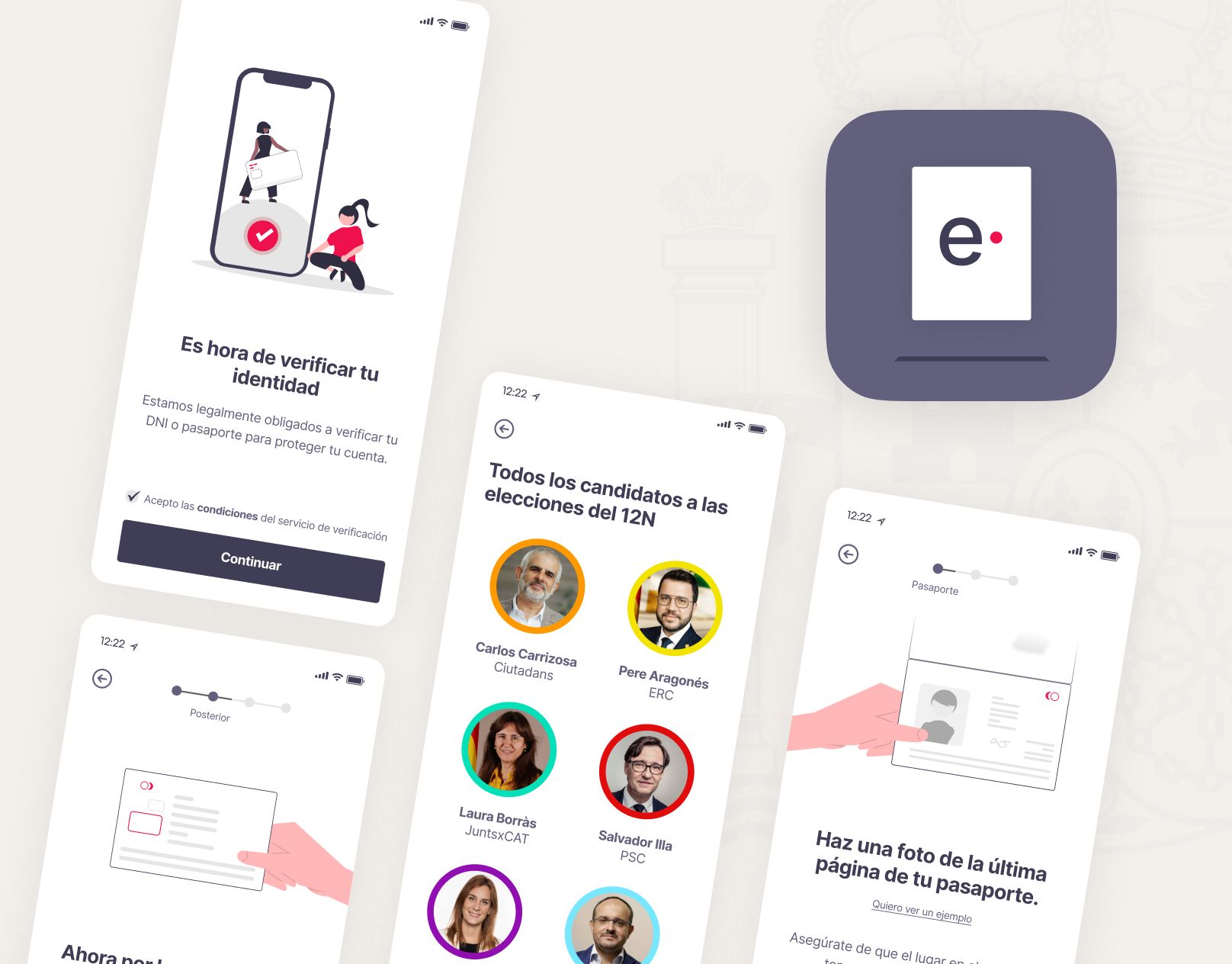
Context
Voting by mail in Spain has a very bad reputation: there’s no guarantee the process will work. People abroad face long queues and have to travel to capitals or major cities to vote. Many simply give up out of frustration.
An app to vote wouldn’t only make voting abroad easier. It could increase participation at home, for people who find it hard to get to a polling station, or who are unsure whether to go at all.
Problem
Two things had to be true at once. It had to be secure: verify who votes, guarantee one vote per person, and resist fraud. And it had to be universal: simple and clear enough for everyone, and never influencing the vote itself.
Role
A self-initiated project: I did the research, UX and UI.
Process
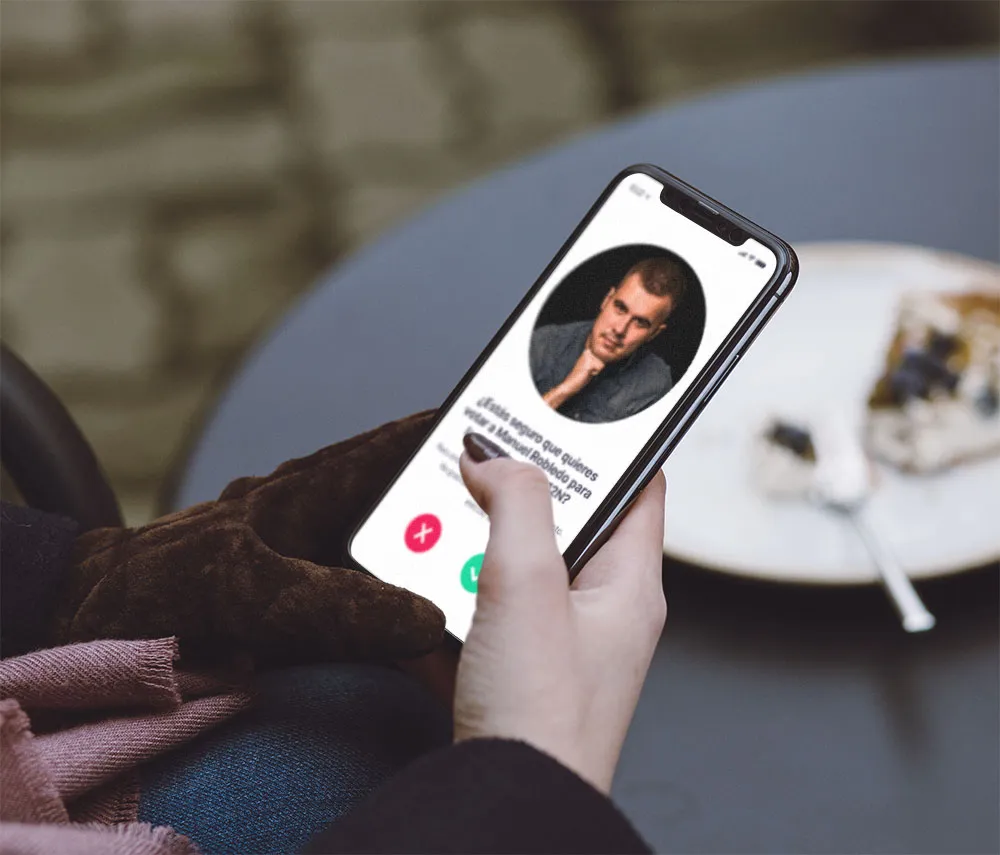
I studied how voting and vote-by-mail work, spoke with people who vote from abroad, and looked for ways to motivate citizens who no longer want to vote. Along the way I discovered some curious regulations for parties during electoral campaigns.
Key decisions
Chromatic impartiality. The accent colour of e·voting is generated at random, so the interface never nudges a voter toward any party’s colours.
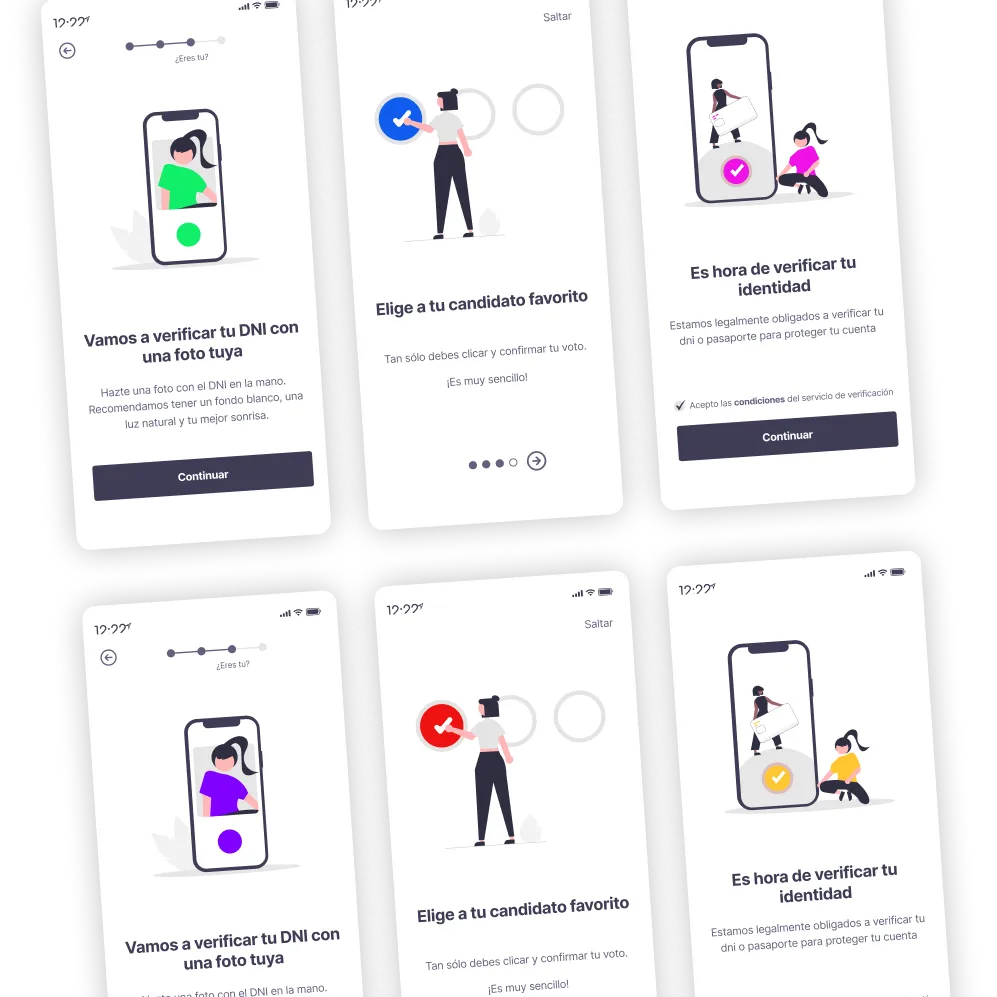
Identity first, then choice. A short, guided verification with your ID or passport before choosing a candidate: security made calm, not scary.
Vote any time. Voting abroad was the core need, but it also lets anyone vote when it suits them, without queues.
Outcome
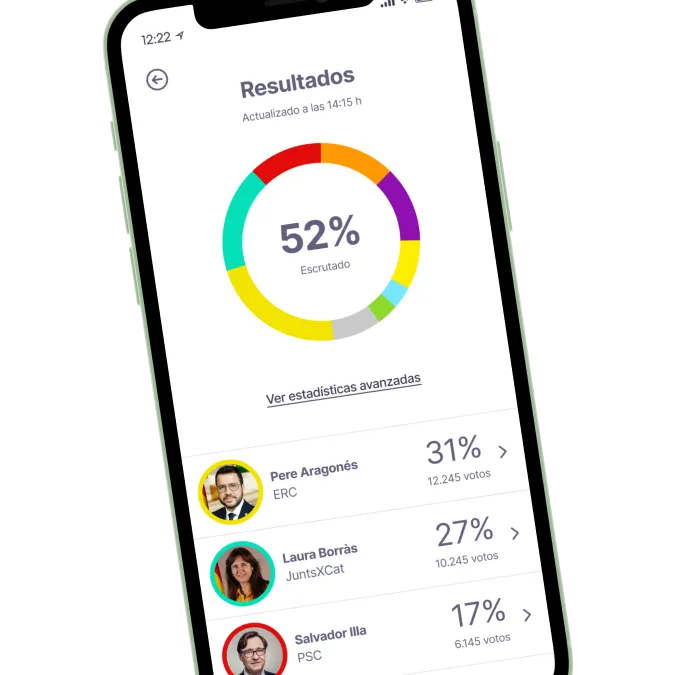
A complete concept and prototype, with a proposed next step: election results right after voting, updated live throughout election day.
Learnings
Simplifying without losing security was the hardest and most interesting balance, especially for people who no longer feel like voting. And working with people I hadn’t worked with before showed me other ways of approaching the creative process.